
The main blood vesselsSpec 9.3.3, 9.3.6
In short
The main blood vessels are the vena cava, which brings deoxygenated blood from the body to the right atrium, the pulmonary artery to the lungs, the pulmonary vein back to the left atrium, and the aorta to the body. The renal artery and vein serve the kidneys, and the hepatic portal vein carries absorbed nutrients to the liver.
| Vessel | Carries blood | Oxygen content |
|---|---|---|
| Vena cava | From the body to the right atrium | Deoxygenated |
| Pulmonary artery | From the right ventricle to the lungs | Deoxygenated |
| Pulmonary vein | From the lungs to the left atrium | Oxygenated |
| Aorta | From the left ventricle to the body | Oxygenated |
| Renal artery | From the aorta to the kidney | Oxygenated |
| Renal vein | From the kidney to the vena cava | Deoxygenated; contains less urea than the blood in the renal artery |
Supplement (what this means)
Supplement: only for the Extended papers (2 and 4). Core students can skip it. What the labels meanBlood vessels of the liver
Supplement (what this means)
Supplement: only for the Extended papers (2 and 4). Core students can skip it. What the labels mean- Hepatic artery: brings oxygenated blood to the liver.
- Hepatic portal vein: brings blood from the small intestine, carrying absorbed nutrients, to the liver.
- Hepatic veins: take blood away from the liver to the vena cava.
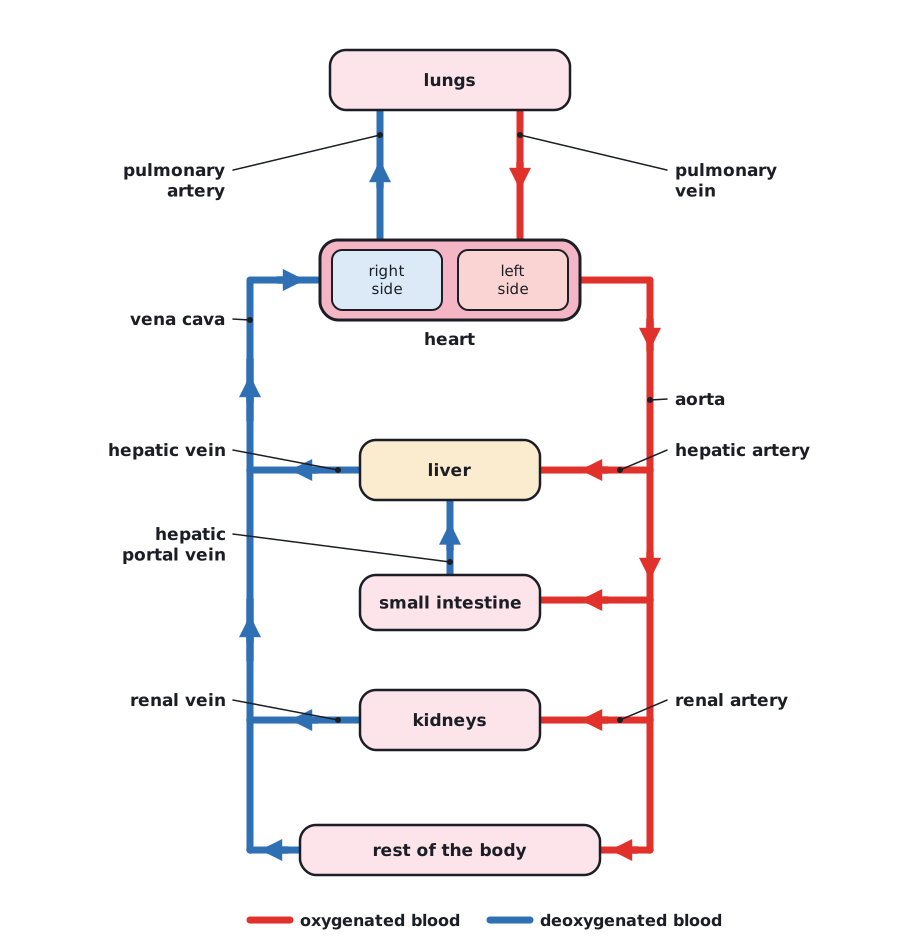 (opens full size in a new tab)
Arteries do not always carry oxygenated blood. The pulmonary artery carries deoxygenated blood and the pulmonary vein carries oxygenated blood. Artery or vein depends on the direction relative to the heart.
Quick check
Which blood vessels have valves?
Show answer
Veins.
State the function of capillaries.
Show answer
Exchange of substances between the blood and the cells of the body tissues.
Supplement Why do arteries have thick walls?
Show answer
They carry blood at high pressure, so the walls must withstand it.
Name the blood vessel that carries blood from the lungs to the heart.
Show answer
Pulmonary vein.
Supplement Which vessel carries blood from the small intestine to the liver?
Show answer
The hepatic portal vein.
Written and checked against the Cambridge IGCSE Biology (0610) specification · Updated October 2026