
White blood cells and blood clottingSpec 9.4.4, 9.4.5, 9.4.6, 9.4.7
In short
Blood clotting prevents blood loss and stops pathogens entering a wound. Clotting is the conversion of soluble fibrinogen to insoluble fibrin, which forms a mesh that traps red blood cells and dries into a scab. The two types of white blood cell are lymphocytes, which produce antibodies, and phagocytes, which engulf pathogens by phagocytosis.
Roles of blood clotting
When the skin is cut, blood clots to prevent blood loss and to prevent the entry of pathogens into the body. The clot dries to form a scab.
Supplement (what this means)
Supplement: only for the Extended papers (2 and 4). Core students can skip it. What the labels meanTwo types of white blood cell
Supplement (what this means)
Supplement: only for the Extended papers (2 and 4). Core students can skip it. What the labels mean| Type | How to identify | Function |
|---|---|---|
| Lymphocyte | Large round nucleus filling most of the cell, with little cytoplasm | Antibody production |
| Phagocyte | Lobed or bean-shaped nucleus and a larger amount of cytoplasm | Engulfing pathogens by phagocytosis |
Supplement (what this means)
Supplement: only for the Extended papers (2 and 4). Core students can skip it. What the labels mean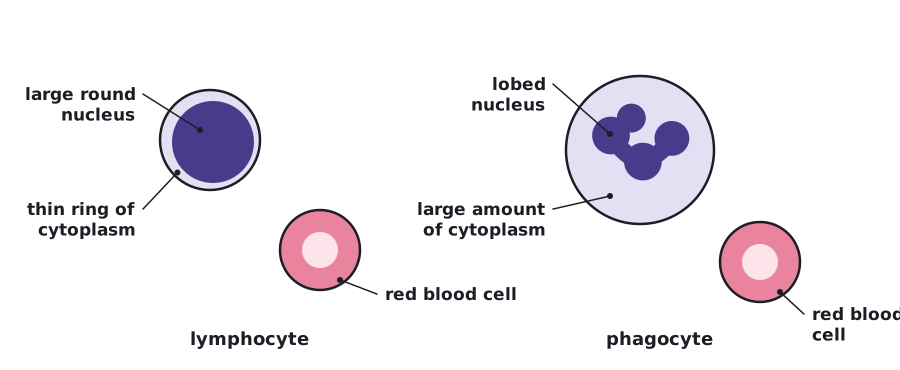 (opens full size in a new tab)
Supplement (what this means)
Supplement: only for the Extended papers (2 and 4). Core students can skip it. What the labels meanThe clotting process
Supplement (what this means)
Supplement: only for the Extended papers (2 and 4). Core students can skip it. What the labels meanClotting is the conversion of soluble fibrinogen to insoluble fibrin to form a mesh.
Supplement (what this means)
Supplement: only for the Extended papers (2 and 4). Core students can skip it. What the labels mean- A blood vessel is damaged and blood escapes.
- Fibrinogen (a soluble protein in the plasma) is converted to fibrin (insoluble).
- Fibrin forms a mesh of fibres across the wound.
- The mesh traps red blood cells and forms a clot, which dries into a scab.
Supplement (what this means)
Supplement: only for the Extended papers (2 and 4). Core students can skip it. What the labels mean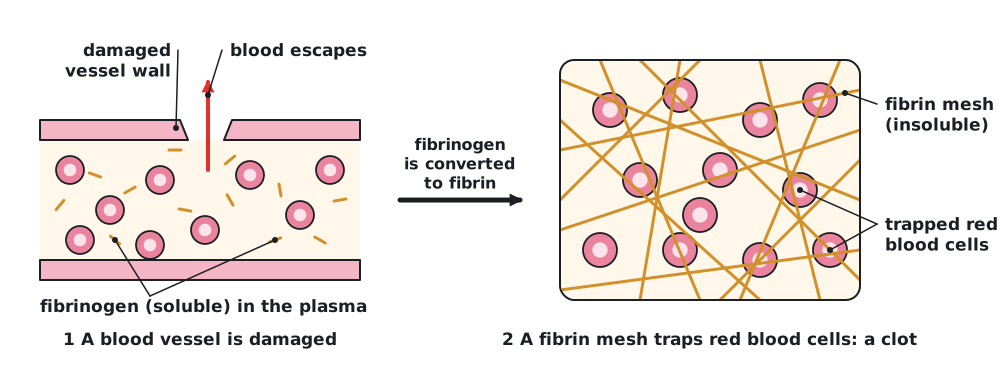 (opens full size in a new tab)
Supplement (what this means)
Supplement: only for the Extended papers (2 and 4). Core students can skip it. What the labels meanFibrin is the insoluble mesh. Fibrinogen is the soluble form in the plasma. Do not swap them.
Quick check
List the four components of blood.
Show answer
Red blood cells, white blood cells, platelets and plasma.
What is the function of haemoglobin?
Show answer
To transport oxygen in the red blood cells.
State two roles of blood clotting.
Show answer
Prevents blood loss and prevents entry of pathogens.
Supplement What does a phagocyte do?
Show answer
Engulfs pathogens by phagocytosis.
Supplement Name the protein converted to fibrin during clotting.
Show answer
Fibrinogen.
Written and checked against the Cambridge IGCSE Biology (0610) specification · Updated October 2026