
Rods, cones and the foveaSpec 14.2.7, 14.2.8, 14.2.9
In short
Rods and cones are the two types of light receptor in the retina. Rods are more sensitive to light, so they give night vision in dim light. Cones give colour vision in bright light, and there are three kinds, absorbing red, green and blue light. The fovea has the most cones and no rods, so it gives the sharpest vision.
The retina contains two types of light receptor, rods and cones.
| Rods | Cones | |
|---|---|---|
| Distribution in the human retina | Spread over the retina, more towards the edges; none in the fovea | Packed closely in the fovea, with fewer over the rest of the retina |
| Function | Greater sensitivity to light, so used for night vision (dim light) | Colour vision, in bright light |
| Types | One type | Three different kinds, absorbing light of different colours |
The three kinds of cone absorb red, green and blue light. The brain combines the signals from the three kinds to give colour vision.
The fovea
The fovea is a small area of the retina directly behind the lens. Its function is to give the sharpest vision (the greatest detail) because it has a very high density of cones. When you look straight at an object, its image falls on the fovea.
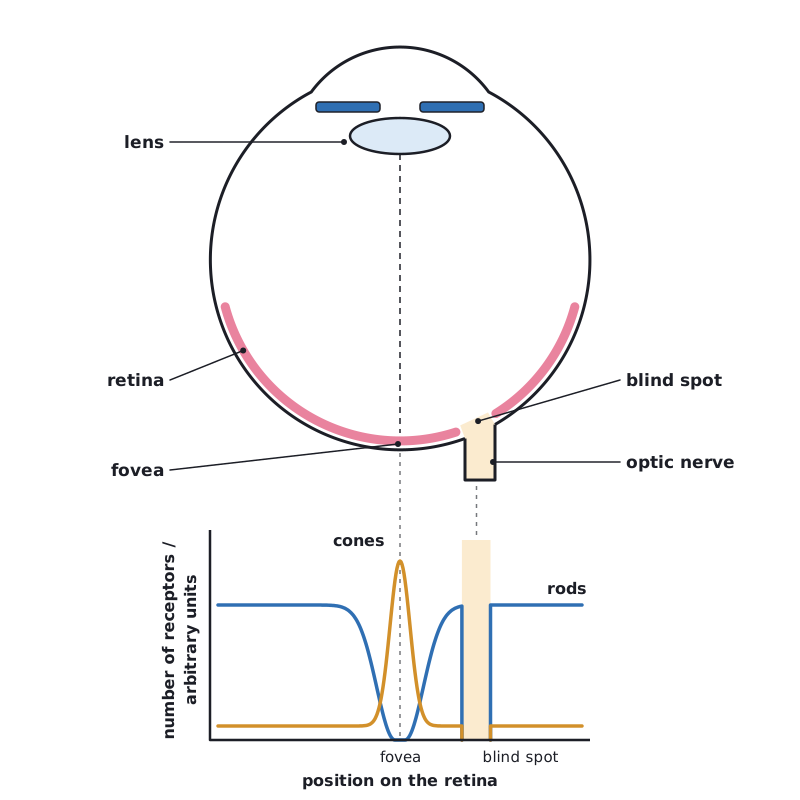 (opens full size in a new tab)
Link the receptor to the light level: rods for dim light (night vision) and cones for bright light and colour. Say the fovea has the highest density of cones and no rods, so it gives the sharpest vision.
Quick check
Which structure of the eye refracts light as it enters?
Show answer
The cornea.
What is the blind spot?
Show answer
The place where the optic nerve leaves the eye. It has no receptors.
What happens to the pupil in bright light?
Show answer
It gets smaller, so less light enters the eye.
Supplement Which muscles of the iris contract to widen the pupil?
Show answer
The radial muscles.
Supplement What is the function of the fovea?
Show answer
It gives the sharpest vision because it has a high density of cones.
Written and checked against the Cambridge IGCSE Biology (0610) specification · Updated October 2026