
Sewage, fertiliser and eutrophicationSpec 20.3.1, 20.3.4
In short
Eutrophication is the chain of events when extra nitrate and other ions from excess fertiliser or untreated sewage enter water. Algae and water plants grow fast and block light, so producers deeper down die. Decomposers increase and their aerobic respiration uses up dissolved oxygen, so fish and other organisms that need dissolved oxygen die.
Untreated sewage and excess fertiliser both contain nitrates and other ions. If they get into rivers and lakes, they harm aquatic ecosystems.
- Untreated sewage also contains microorganisms that cause disease and organic matter that decomposers break down using oxygen.
- Excess fertiliser is washed (leached) from fields by rain into streams and rivers.
- The extra ions cause water plants and algae to grow quickly. When they die, decomposers break them down and use up oxygen in the water, so fish and other aquatic organisms die.
Supplement (what this means)
Supplement: only for the Extended papers (2 and 4). Core students can skip it. What the labels meanEutrophication
Supplement (what this means)
Supplement: only for the Extended papers (2 and 4). Core students can skip it. What the labels mean- Nitrate and other ions increase in availability in the water.
- Producers (algae and water plants) grow faster, forming an algal bloom that blocks light.
- Producers deeper in the water cannot photosynthesise and die; there is increased decomposition after their death.
- Decomposers (bacteria) increase in number and carry out increased aerobic respiration.
- The decomposers use up oxygen, so there is a reduction in dissolved oxygen.
- Organisms that require dissolved oxygen, such as fish and insect larvae, die.
Supplement (what this means)
Supplement: only for the Extended papers (2 and 4). Core students can skip it. What the labels mean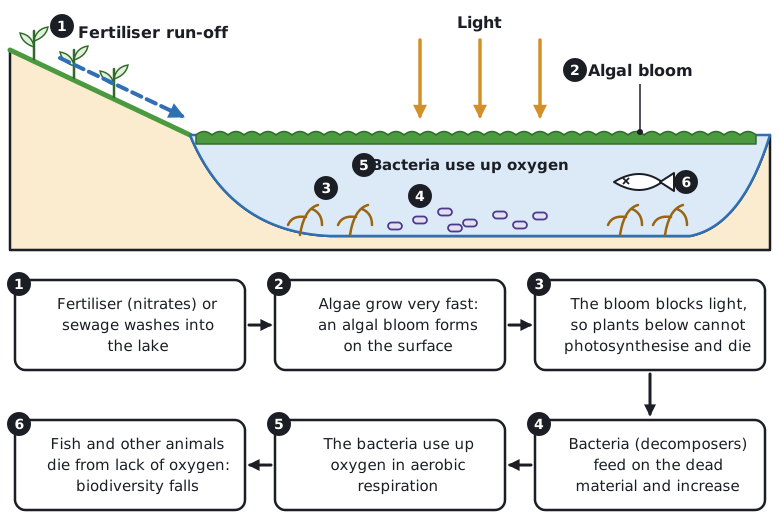 (opens full size in a new tab)
Supplement (what this means)
Supplement: only for the Extended papers (2 and 4). Core students can skip it. What the labels meanExam tip:
Do not say the algae 'use up the oxygen'. It is the decomposers' aerobic respiration, after the producers die, that lowers dissolved oxygen.
Written and checked against the Cambridge IGCSE Biology (0610) specification · Updated October 2026