
Root hair cells and the pathway of waterSpec 8.2.1, 8.2.2, 8.2.3
In short
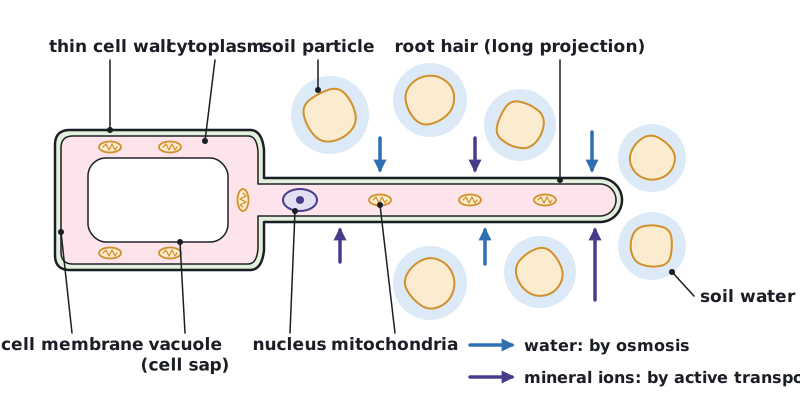
A root hair cell is a cell in the outer layer of the root with a long, thin extension that absorbs water and mineral ions from the soil. The root hair gives a large surface area, which increases uptake. Water then passes through the root cortex cells, into the xylem, and up to the mesophyll cells of the leaf.
Root hair cells
A root hair cell is a cell in the outer layer of the root that has a long, thin extension called the root hair. Its functions are to absorb water from the soil and to absorb mineral ions from the soil.
The root hair gives the cell a large surface area, which increases the uptake of water and mineral ions.
 (opens full size in a new tab)
The pathway of water
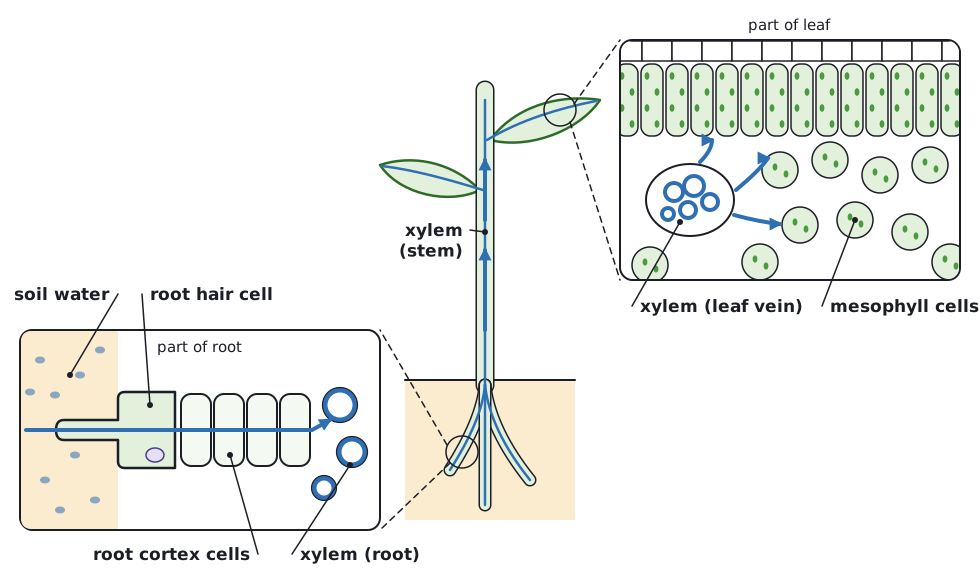
Water takes the same route from the soil to the air. You need to be able to outline it.
- Water enters the root hair cells from the soil.
- It passes through the root cortex cells.
- It enters the xylem and moves up the root and stem.
- It leaves the xylem in the leaf and reaches the mesophyll cells.
 (opens full size in a new tab)
Give the cells in the right order: root hair cells, root cortex cells, xylem, mesophyll cells. Writing 'roots to leaves' alone will not score.
Written and checked against the Cambridge IGCSE Biology (0610) specification · Updated October 2026