
Hormones and endocrine glandsSpec 14.3.1, 14.3.2, 14.3.4
In short
A hormone is a chemical substance, produced by a gland and carried by the blood, which alters the activity of one or more specific target organs. Endocrine glands include the adrenal glands (adrenaline), pancreas (insulin), testes (testosterone) and ovaries (oestrogen). Compared with nervous control, hormonal control is slower but its effects last longer.
A hormone is a chemical substance, produced by a gland and carried by the blood, which alters the activity of one or more specific target organs.
- Hormone
- A chemical substance, produced by a gland and carried by the blood, which alters the activity of one or more specific target organs.
The glands that make hormones are called endocrine glands. They release hormones straight into the blood. The blood carries the hormone around the whole body, but it only affects its target organs.
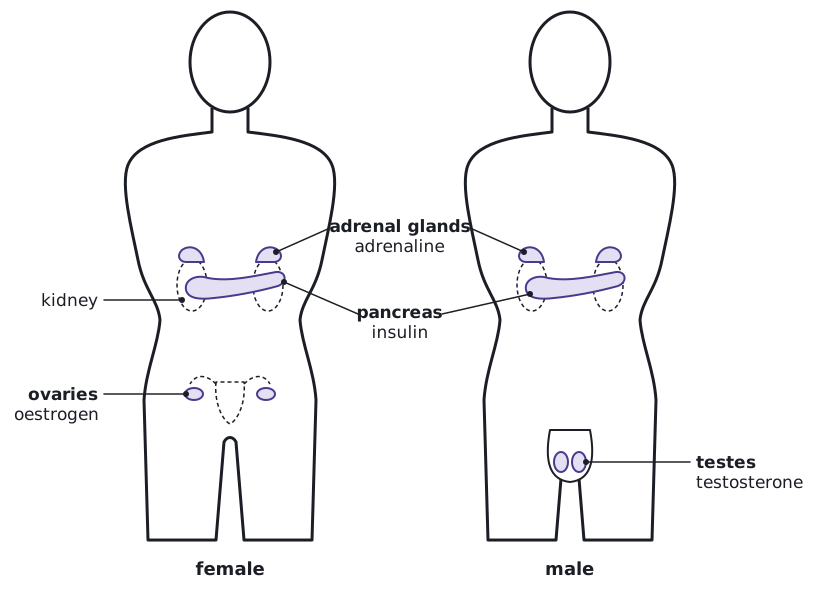 (opens full size in a new tab)
| Gland | Hormone secreted |
|---|---|
| Adrenal glands | Adrenaline |
| Pancreas | Insulin |
| Testes | Testosterone |
| Ovaries | Oestrogen |
Nervous control and hormonal control
| Nervous control | Hormonal control | |
|---|---|---|
| Speed of action | Very fast: impulses travel quickly along neurones | Slower: hormones travel in the blood |
| Duration of effect | Short: the effect stops soon after the impulse stops | Longer: the effect can last minutes, hours or longer |
In a comparison, always give both sides. Say 'nervous is fast and hormonal is slower', not just 'hormones are slow'.
Written and checked against the Cambridge IGCSE Biology (0610) specification · Updated October 2026