
Book a tutor

Mitosis

Inheritance · Mitosis and meiosis · note 1 of 3

Spec 17.2.1, 17.2.2, 17.2.3, 17.2.4
Supplement (what this means)Supplement: only for the Extended papers (2 and 4). Core students can skip it. What the labels mean
Download all Mitosis and meiosis notes (PDF)Download all notes (PDF)5 pages

MitosisSpec 17.2.1, 17.2.2, 17.2.3, 17.2.4

In short

Mitosis is nuclear division giving rise to genetically identical cells. Before mitosis the chromosomes are exactly replicated, and during mitosis the copies separate, one into each new nucleus, so the chromosome number is maintained. Mitosis is used for growth, repair of damaged tissues, replacement of cells such as skin cells, and asexual reproduction.

Mitosis
Nuclear division giving rise to genetically identical cells.

Before a cell divides by mitosis, the chromosomes are copied. The exact replication of chromosomes occurs before mitosis, so each chromosome is made of two identical copies. During mitosis the copies of chromosomes separate, and one copy goes into each new nucleus. This maintains the chromosome number in each daughter cell.
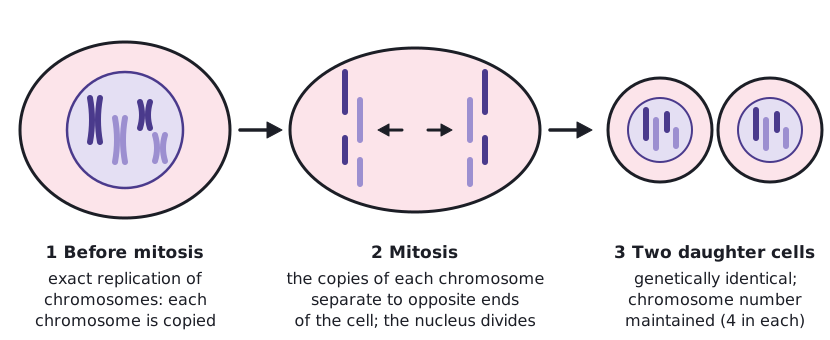
Three steps of mitosis: a parent cell whose 4 chromosomes have each been copied, the copies of each chromosome separating to opposite ends of the cell as the nucleus divides, and two genetically identical daughter cells with 4 chromosomes each. (opens full size in a new tab)
Chromosomes are copied before mitosis, then the copies separate, so each daughter cell keeps the same chromosome number.

The two daughter cells have the same number of chromosomes and the same genes as the parent cell. A diploid cell divides to make two diploid cells.

The role of mitosis

Roles of mitosis
RoleExplanation
Growthmore cells are made so that the organism gets bigger
Repair of damaged tissuesnew cells replace those that are damaged
Replacement of cellscells such as skin cells are lost and replaced all the time
Asexual reproductionone parent makes offspring that are genetically identical to it
Exam tip:

Use the phrase 'genetically identical' for mitosis. You do not need the names of the stages of mitosis.

Written and checked against the Cambridge IGCSE Biology (0610) specification · Updated October 2026

Frequently asked questions

What is the difference between mitosis and meiosis?

Mitosis produces two genetically identical diploid cells, while meiosis produces four genetically different haploid cells. Mitosis is used for growth, repair, cell replacement and asexual reproduction. Meiosis is a reduction division used to make gametes in the testes and ovaries, halving the chromosome number from diploid to haploid.

Why is meiosis important for sexual reproduction?

Meiosis is important because it halves the chromosome number, so gametes are haploid. When a sperm fertilises an egg, the full diploid number is restored in the zygote: 46 chromosomes in humans. If gametes were diploid, the chromosome number would double in every generation. Meiosis also makes gametes genetically different.

Why are stem cells useful?

Stem cells are useful because they are unspecialised cells that divide by mitosis to produce daughter cells that can become specialised, such as red blood cells or nerve cells. Some daughter cells stay as stem cells, so the supply is not used up. They become specialised when only some of their genes are expressed.

All 4 questions on Mitosis and meiosis