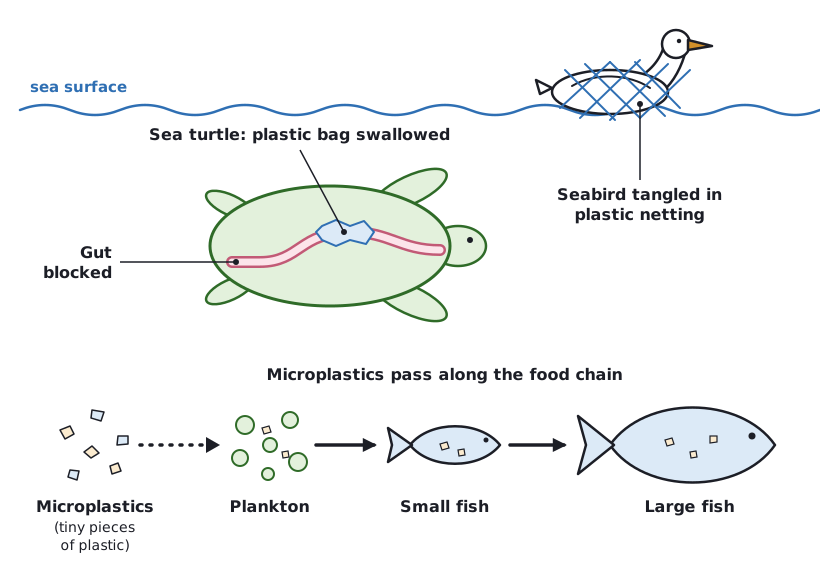
Non-biodegradable plastics are plastics that microorganisms cannot break down, so they stay in the environment for a very long time. In aquatic ecosystems, animals such as turtles and seabirds swallow plastic, which can block their digestive system, or become tangled and drown. Tiny pieces enter food chains. On land, plastic builds up in landfill and soil.
Plastics are non-biodegradable: microorganisms cannot break them down, so they stay in the environment for a very long time. Plastics are widely used for packaging and are often thrown away carelessly.
Effects of non-biodegradable plastics
Ecosystem
Effects
Aquatic (rivers, seas)
Animals such as turtles, seabirds and fish swallow plastic, which can block their digestive system so they starve; animals become tangled in plastic and drown or cannot move; plastic breaks into tiny pieces that enter food chains
Terrestrial (land)
Plastic waste in landfill takes up space and does not rot; animals eat plastic or become trapped in it; plastic can build up in soil and may release harmful chemicals; plastic waste can block drains and watercourses
Always link the plastic to a specific harm: 'blocks the gut' or 'entangles the animal', not just 'it harms animals'.
Written and checked against the Cambridge IGCSE Biology (0610) specification · Updated October 2026
Frequently asked questions
What is eutrophication and what causes it?
Supplement Eutrophication is caused by extra nitrate and other ions entering water from excess fertiliser or untreated sewage. Algae and water plants grow faster, forming an algal bloom that blocks light. Producers deeper in the water die, and decomposers increase. Their aerobic respiration uses up dissolved oxygen, so fish and other organisms that need oxygen die.
How does plastic pollution affect marine life?
Plastic pollution harms marine life because plastics are non-biodegradable, so they last a very long time. Turtles, seabirds and fish swallow plastic, which can block their digestive system so they starve. Animals become tangled in plastic and drown or cannot move. Plastic also breaks into tiny pieces that enter food chains.
What causes the enhanced greenhouse effect?
The enhanced greenhouse effect is caused by human activities increasing the concentrations of carbon dioxide and methane in the atmosphere. Burning fossil fuels and forests releases carbon dioxide, while cattle, rice paddy fields and landfill sites release methane. These gases trap more infrared radiation, so the Earth's average temperature rises, causing climate change.

 (opens full size in a new tab)