
Book a tutor

Features of gas exchange surfaces

Gas exchange in humans · Gas exchange in humans · note 2 of 6

Features of gas exchange surfacesSpec 11.1.1

In short

A good gas exchange surface in humans has four features: a large surface area, a thin surface, a good blood supply and good ventilation with air. In the alveoli, oxygen diffuses into the blood and carbon dioxide diffuses out. Millions of alveoli give a large surface area, and walls one cell thick give a short diffusion distance.

Gas exchange happens at the surface of the alveoli. Oxygen moves from the air in the alveoli into the blood, and carbon dioxide moves from the blood into the air in the alveoli. Both gases move by diffusion.

A good gas exchange surface in humans has four features: a large surface area, a thin surface, a good blood supply and good ventilation with air.

How the alveoli are adapted for gas exchange
FeatureWhy it helps
Large surface area (millions of alveoli)More space for oxygen and carbon dioxide to diffuse across, so more gas can be exchanged at once
Thin surface (walls of the alveoli and capillaries are one cell thick)Short distance for the gases to diffuse, so diffusion is fast
Good blood supply (network of capillaries around each alveolus)Blood carries oxygen away and brings carbon dioxide, which keeps a steep concentration gradient
Good ventilation with air (breathing in and out)Fresh air keeps the oxygen concentration high and the carbon dioxide concentration low in the alveoli, which keeps a steep concentration gradient
Exam tip:

Do not stop at the feature. Link it to its effect: for example, thin walls give a short diffusion distance, so diffusion is faster.
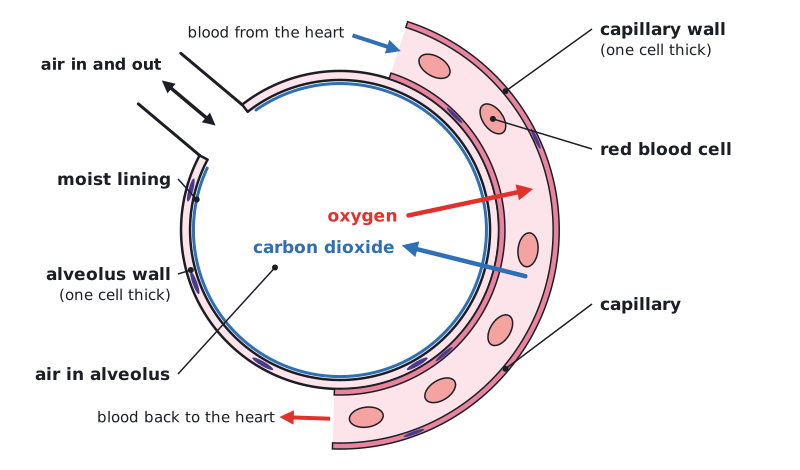
One alveolus beside a capillary, showing oxygen diffusing from the air in the alveolus into the blood and carbon dioxide diffusing from the blood into the alveolus, with labels for the alveolus wall and capillary wall (each one cell thick), the moist lining, red blood cells and the direction of blood flow. (opens full size in a new tab)
Oxygen diffuses into the blood and carbon dioxide diffuses out, across two walls that are each one cell thick.

Written and checked against the Cambridge IGCSE Biology (0610) specification · Updated October 2026

Frequently asked questions

How are alveoli adapted for gas exchange?

Alveoli are adapted for gas exchange by having a large surface area, from millions of alveoli, and thin walls one cell thick, giving a short diffusion distance. A network of capillaries around each alveolus gives a good blood supply, and ventilation brings fresh air. Both keep a steep concentration gradient, so diffusion is fast.

How does the diaphragm help you breathe in?

Supplement When you breathe in, the diaphragm muscles contract, so the diaphragm moves down and flattens. At the same time the external intercostal muscles contract and lift the ribs up and out. The volume of the thorax increases and the pressure falls below the air pressure outside, so air moves into the lungs.

Why does expired air contain more carbon dioxide than inspired air?

Supplement Expired air contains more carbon dioxide because body cells produce carbon dioxide in respiration. It is carried to the lungs in the blood and diffuses into the alveoli, so expired air has about 4% carbon dioxide compared with about 0.04% in inspired air. Expired air also contains less oxygen and more water vapour.

All 5 questions on Gas exchange in humans